Showing posts with label goodreads. Show all posts

Saturday, 24 October 2020

A Book Haul #5


This Must Be The Place by Maggie O’Farrell
Americanah by Chimamanda Ngozi Adichie 
Purple Hibiscus by Chimamanda Ngozi Adichie
Atonement by Ian McEwan


Half of a Yellow Sun by Chimamanda Ngozi Adichie 
The Kite Runner by Khaled Hosseini
We Should All Be Feminists by Chimamanda Ngozi Adichie
We Were Liars by Emily Lockhart


Hello again guys, it feels like forever since I posted a book haul and so it definitely is the time to embrace my love of books and show you some of my recent purchases. Over the past year I’ve definitely been buying books more and more; I use the Library a lot too (especially as I work in one) but there is something so satisfying about owning books too. I read so many different genres of books, from Crime, A/C, Fantasy, Non-Fiction and more that there is always something that appeals to me enough to buy, but buying books isn't always the cheapest, which is a shame as books are so lovely to have.

However, I love discovering books for amazingly reasonable prices on eBay, Amazon and in charity shops as they’re usually in great condition too, although I admit that I always have to flick through the pages first as I can be kind of picky when it comes to buying books; I want to make sure that it's a book that I'll reread at some point rather than a book that I will end up hating as generally when I own books I like them to be books that I really love. That said, I've bought a lot of books recently, although I definitely need to start cutting down as I'm running out of shelf space, oops. Maybe the time has come to buy another book shelf, although I'm not sure where I'll have the space to put it, sadly. (Small house problems, haha).

Have you made any book purchases recently? Let me know in the comments! :)


Sunday, 16 September 2018

Book Review: Holding Up the Universe


As anyone who has read my blog before will know; I do love Young Adult fiction and so after seeing this one hyped over on bookstagram pages I decided to give it a go .Focussing on two teenagers, Jack and Libby, the story develops as Libby head back into mainstream High School after taking two years out. Once known as America's Fattest Teen, as much as she has lost copious amounts of weight, unfortunately she's still a lot bigger than many of her classmates and so the teasing and name calling doesn't come as a surprise to her, sadly. Thanks to some rather unfortunate peer pressure, Jack gets involved in a nasty fat shaming prank that results in Libby sticking up for herself. In an attempt to not be called a coward by his friends, he ultimately becomes a coward in the eyes of the viewer and of Libby. Both he and Libby find themselves in group counselling together, alongside community service which neither are particularly happy about.

As the novel progresses, you do see their relationship begin to blossom; I liked how there was an initial connection between them that Libby wasn't aware of. It does make you appreciate his character a lot more, as to begin with I wasn't keen on him at all. That being said, there was nothing about this book that massively stood out for me; both Libby and Jack were defined by their conditions, Libby with her weight and Jack with his inability to recognise faces and they never seemed to develop much beyond that, which was a shame as they both had more potential. Of the two, Libby was more relatable due to her insecurities about her weight and looks in general, but at the same time she also seemed a little too confident at times for someone in her situation. Jack came across as a bit of an airhead, a stereotypical popular boy and I didn't feel any warmth for their growing relationship as it seemed quite forced as well as unbelievable at times. It sounds harsh but the whole two broken people falling in love felt a little overdone in this novel, which was disappointing as after reading All The Bright Places by the same author, I was expecting better execution.

Overall, I wasn't enamored with this book. The pace felt very slow, the characters not massively developed and the plot rather ill thought out. It was pretty offensive in terms of content, although the portrayal of Libby was a lot better than I expected, I wanted her to be more than just body image, teenage angst and aggression. This book isn't amazing, it's not the worst book that I've read but it's not the best, either. Niven's writing style is unique and that is what saved this for me; I do genuinely enjoy her style and the way that her text flows from page to page and chapter to chapter. However I do wish that her characters were less one dimensional as having read two of her books now I do feel like there is a formula to her work and that is disappointing. I want to see characters grow and develop, to become more than you expect and that just didn't happen. Jack was particularly uninteresting and selfish, I preferred his little brother which says it all when he's supposed to be a key figure. Based purely on the writing style, I rate this book 3 stars but it isn't one that I'd recommend. As I've said, I'm disappointed.

Sunday, 5 August 2018

Book Review: A Very Old Man with Enormous Wings


Translated from Spanish, this is a book of two, very short stories. Both stories have a sense of fantastic realism, which in general isn't to my taste, but for the sake of 50 pages, I decided to give it a chance. The subtitle translates into 'For Children', which explains why at first glance the text is incredibly simple.The first of the two short stories, 'A Very Old Man with Enormous Wings' arguably refers to various religious symbolism, although this is not laid out for the reader to notice or even understand; the reader is told that the man has wings, but without any explanation or additional information. From an obvious point of view, he is angel, although this is not confirmed at any stage; his presence encourages people from the to recognise their hypocrisy, however this leads to a rather tenuous link between the greed of the people and the greed of the Church. In truth, the whole of this short story is left open to interpretation; what I perceived may be completely different to another view of the tale. In all honesty, this story didn't grab me as much as I would've liked, although I wasn't exactly upset that it was short either; there was no feature that made me feel as though I wanted more details or a longer version of the tale.

The second of the two short stories, 'The Sea of Lost Time' somehow managed to be even shorter than the first and just as unremarkable for me. The idea of a spider having a girls head was interesting, but ultimately the open ended style of writing didn't flow well in my opinion; exploring the theme of death, the dear of death and therefore uncertainty the life was lost in the idea that life after death may be more interesting, more inviting than the world of the living. Arguably much of the author's ideas and intentions stem from other works and ideas surrounding religion, love, life and death, the natural and supernatural. In this case there is a clear interest in life and death, mixed in with love. The character of old Jacob, a man who has spent many of his years in love with a woman had the potential to grow, but unfortunately due to the writing style of a short story, was unable to progress into a more interesting role. Of the two stories, this one has more potential as the story has more depth; for example, Tobias and Clotilde have an interesting partnership, one which changes due to the changes in the locality.

Overall, neither of the two stories particularly struck me; I didn't feel a connection with either story, but I also wasn't a fan of the writing style. At times, it felt like certain sentences didn't make much sense, although in fairness this a translated text; as it was originally written in Spanish, it could be that some of the meaning has been lost in translation to an extent as no two words or sentences can make an exact copy of another in different languages, unfortunately. Without a clear ending it is difficult to deduce not only what happens, but also where the characters stand in terms of life and death, which is one of the key themes throughout both texts. I'm not sure that I was expecting from this book as it isn't the kind of text that I usually like to read(I'm generally not a fan of supernatural realism), but arguably the concise length of the piece is impressive considering there are two stories within and both have their own fascination with death and decay. The redeeming feature of this collection of short stories is that it does require you to think; to apply a backstory and a future to the characters, as well as determine the correlation between reality and false ideas; how easily a idea can become truth. This was a three star read in my opinion, the saving grace was that the ideas surrounding life and death were interesting but ultimately the writing style wasn't to my taste; that said, it is good to read something a little different from time to time.

Friday, 13 July 2018

Book Review: The Trouble With Goats And Sheep


I was recommended to read this book and in all honesty I wasn’t sure what to feel about it when the book was in my hands, there wasn’t anything that I found particularly appealing, although the title seemed interesting. It’s an unusual interpretation of life, part coming of age and part theology. Set in England, Grace and Tilly are ten years old during the Summer of 1976 which is historically remembered as the longest and hottest Summer seen in the country. The two girls occupy themselves for their Summer holidays by becoming detectives, determinedly questioning each of their neighbours in turns on the premise of being girl guides wanting to gain badges. There are a lot of characters in the book, some of which are odd, some are kind and some are funny; it’s a nice description of life down a typical suburban street but it is a long read; arguably because the heat of the Summer, this book seemed to go on and on forever. Once the characters had been established, the weather was exaggerated as a means of explaining why some characters were most unusually for themselves; the majority of us become unpleasant and irritable when the weather is unbearably hot and Joanna Cannon put that across very well; as well as how the range of characters interacted with each other, too.

The cover art isn't the most interesting, which was a little disappointing for me as I do love a beautiful cover, however the title 'The Trouble With Goats And Sheep' makes up for the plain blue cover with white accents. Having been recommended to me by a relative, I wasn't really sure what to expect; that said, they do usually recommend absolute gems to me. As much as the cover art isn't what I would usually like, there is something about the minimalist vibe that does appeal to me; the contents of the pages are left fairly open to interpretation as the cover gives nothing away and I like that. Surprises are always welcome. The main issue with this book is getting the head around the (what feels like) millions of characters, although as the book develops this becomes easier. Joanna Cannon handles having so many characters well; it never feels like two characters are the same and each narrative voice reads very differently to each of the others, not only due to the differences in age, gender or life experience; they genuinely seem very different in terms of opinion and sentence structure, which is the perfect an example of excellent writing. The writing style of this book is flawless.

In an ordinary street, where people live ordinary lives, is it such a surprise that the neighbours are hiding a collective secret? Likewise, is anyone without a secret? It is clear to reader fairly early on in the novel that there are secrets waiting to be exposed in the novel, secrets that two little girls are determined to get to the bottom of. The wonders of everyday life are spread out across the pages of this book, through each and every one of the characters. My personal favourites were the two ten year olds; Cannon managed to deliver the humour, lack of understanding and innocence that only children can have through their investigations and listening to adults whispering. The multiple characters alongside chapters alternating between 1967 (the past) and 1976 (the present) was a fantastic use of linguistic techniques to feed information through multiple timelines for the benefit of the reader. The multiple points of view was an excellent way of feeding clues through to the reader about the various goings on, but my favourite narrator was definitely Grace and seeing her character develop. She grows from a little girl, determined to boss her friend around, to still a little girl, but one who is learning the value of friendship and the differences between the people of society.

Overall, this book wasn’t a five star read for me. It was a nice read and well written, but it just didn’t have that little extra something to make it have the wow factor. However, it was a solid four star read; there is something beautiful about everyday life, but at the same time there as definitely something missing. I preferred the narrative voices of the children to the adults, not only because they have a beautiful way of seeing and understanding the world, but because of their instinctive thinking. Whereas the adults were all narrow minded and conditioned by each other to keep the secret, the children had a beautiful way of exploring and thinking outside of the box. There are so many reasons why I wish that I had loved this book more than I did; one of them being that I wanted more focus on the children, another being that the adults were all so unlikable. There are elements of this story that completely captured my heart and others that bored me; nothing to do with the writing style, which I really liked, more to do with the plot not having enough oomph to contain interest throughout the moments where events were sparse. This is a good read, one that I would recommend; I'm looking forward to reading more books by Joanna Cannon as she has a lovely way with words. 


Wednesday, 4 July 2018

Book Review: Salt to the Sea


A fictional novel depicting a real event; during 1945, hundreds of thousands of civilians were desperate, destitute and sick of war. Running through East Prussia, attempting to avoid the wrath of soldiers from both sides, this book uses a multi person narrative to describe the event from all sides. Four young people, different nationalities and situations. Joana is a Lithuanian nurse, headstrong, confident and a natural leader. Florian is Prussian, a mysterious man who is clearly attempting to slip through the net and is hiding a lot of secrets. Emilia is Polish, young, pregnant and alone - desperate to find safety and security in another country, outside of Eastern Europe. Alfred is German, a newly recruited sailor and a lover of Hitler’s regime. Each of them are boarding the ships across countries for their own reasons, but ultimately, each of them are determined to see the war end. Freedom from war is the ultimate dream for everyone in this novel. The text was laid out fairly easily, with the narrating characters name as the title of each chapter; to begin with, it was a little confusing as you need to engross yourself in the story to understand who is who. My favourite narrator was Joana; not only because she was incredibly astute and noticed even the littlest of details, but because she was genuinely caring. She was determined to help as many people as possible, regardless of their age, race or gender whilst attempting to stay alive herself.

As the novel developed, so did each of the narrators and their acquaintances; for example, Joana was with a group attempting to hide from soldiers in the forest and escape to the ports. Alongside her were a variety of others, an elderly man, a young blind girl, an orphaned little boy and a German lady who was convinced that everyone is a spy. Emilia was saved from a soldier by Florian, who instantly becomes her saviour, so she in turn shoots a solider in defence of Florian; the pair meet the other group on their travels and reluctantly tag along. Florian in particular is not at all comfortable in being within a group, although there are benefits to travelling in numbers. Alfred’s narrative differs a lot compared to the other three, mostly due to his being in letter form to a girl from home. Judging by the way that he describes his duties, he thinks a lot more of himself than anyone else does, including the girl he writes to; even in his letters to her, they’re always in his head. Arguably, this is a sign of mental illness. Not only talking to himself, about himself, but also convincing himself that the girl he is obsessed with returns his affections. Regardless of what each of them are internally suffering, the four young people are brought together entirely by the circumstance of war. Each of them has a secret, each of which is revealed after the plot begins to shape. From the first few pages, this book gripped me. The descriptions of their hunger, fear and determination made each situation that was thrust upon them so incredibly real and heartbreaking made this book an absolute page turner for me.

Each of the characters made their own sacrifices, for their own reasons, but Emilia was the biggest surprise of all. Three of them had good arguments for why they were fighting for freedom and their narrative wasn’t only interesting but allowed for information about ordinary people, how their lives had been devastated by war. The fourth narrative voice was so difficult to read at times, it was impossible to argue with their point of view, as it was just so wrong but understandably, it was an important part of why the war was ongoing and it also added another layer to the overall plot line. One of the reasons that this book was such a pleasurable read was that although it is historical fiction, it wasn’t overrun with facts or pushing history onto the reader. Yes, history had a massive part of the telling of this story and although it is ultimately fiction, this novel genuinely read as though it was truly real life although that is because of Sepetys’ beautiful variation of true events from a fictional standpoint. She mixed truth and fiction so seamlessly, if I didn’t know better when reading this book I could’ve easily believed that all of this novel was entirely factually accurate. Which is fantastic, really. That is exactly what you want when reading a historical novel, to feel as though you are there with the character, living, breathing and seeing everything that they are. As much as this novel was brutal, vicious and cruel at times, that is what made it so perfect as that is exactly what epitomises war.

Overall, I was pleasantly surprised by how much this book caught my attention. I’d been meaning to read it for months and kept getting distracted by other titles, which I don’t regret, but I do wish I’d given this more of a chance at an earlier point. I cannot fault the writing style of Ruta Sepetys in this novel at any point; the use of four young narrators worked beautifully as each of them had their own issues, their own past and future to fight for as well as the way that she used fact and fiction to depict a harsh reality of war using only words. I loved the short, sharp chapters and often change of narrator, it kept each situation fresh, alongside the excellently executed ending. One of the reasons why I loved this novel so much was the additional explanation of the real life event that this book represented by the author; the fact that she had researched and contacted various museums, relatives and survivors of such a horrific event truly made me understand how hard that time frame must have been. For a Young Adult novel, this is a very intense version of events, although it is also realistic which isn’t a bad thing. It’s important to remember the past and this kind of book does history justice. I read this book in around a day, I cried, I forgot to breathe but as I’ve said many times before, I love a book that makes me think. This was easily a 5 star read for me and I’d recommend it for mature young adults and above. It doesn’t read like a YA novel, so if that genre is not usually your thing, give this book a try as I promise it will be worth it.

Saturday, 9 June 2018

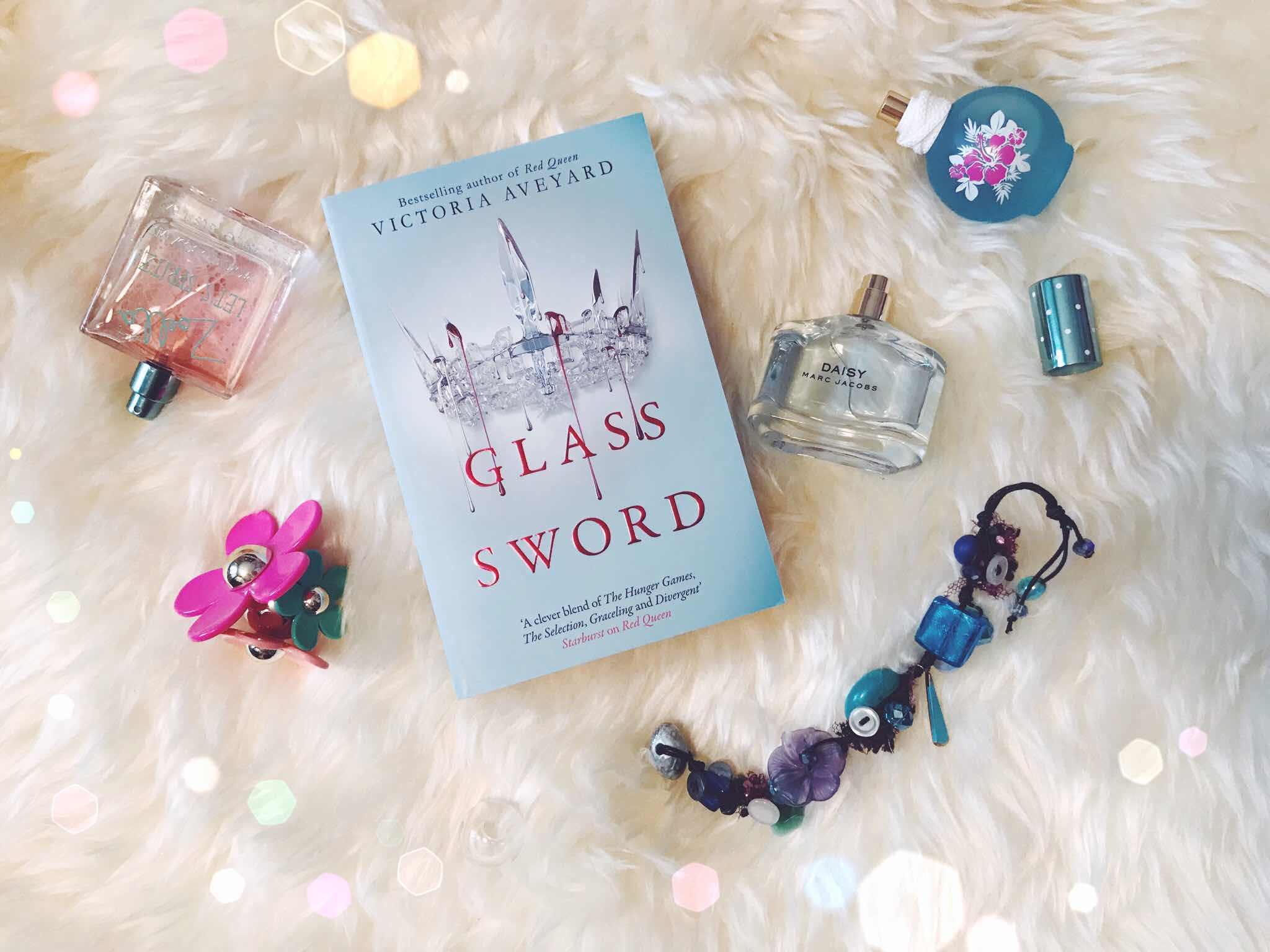
Book Review: Glass Sword


Following on from the first novel in the series, Red Queen we follow the mind of the unusual Mare Barrow once again in Glass Sword. The novel begins immediately from where the first book left off, with a bang. Trapped by her Red blood status but with her Silver abilities, she tries to run from her former friend, love and Prince; no longer sure if Maven is truly who she thought he was, she is constantly on the run from his pursuit of her. Along the way, she discovers that she is not the only one of her kind; essentially she begins building an army, training and understanding herself and others like her, although at points Mare becomes unrecognisable. Changed forever by the actions of Maven and his mother, Mare has started to become exactly the kind of monster that she so desperately seeks to overthrow. Through being betrayed so many times, she’s no longer able to trust or form regular friendships to the point that she doesn’t truly believe or trust in herself either. The majority of this book is based around military tactics, such as training, planning and attempts to takeover the Kingdom. Mare has a genuine understanding of the difference between right and wrong, although through the lengths that she goes to protect others, she creates a ridiculous amount of pressure on herself to be stronger, faster, cleverer... By doing so, she begins to lose her purpose and her sense of self. Her own mind is tearing her apart.

There is a lot of character development for Mare in Glass Sword; she begins to hone her ability and build an army, although as I’ve said, she does start to lose her sense of self, unfortunately. This is what helps the reader to remember how truly young she is, how strong and how much life has thrown the world into her face. As a reader, it is difficult to witness characters that were previously loved and trust begin to betray Mare, although ultimately it is unsurprising due to the world being at war. Mare is both a thinker and an actioneer, which at times does lead to her personality taking over the plot at times as the world is told purely from her first hand perspective and so naturally, Mare does miss some vital points in some cases. It was interesting to see her relationships develop, particularly between Cal and Maven, the two Princes. This second part of the series is definitely more focused on action rather than romance, although both sides of the story are beautifully written, with the reader constantly wanting more information and clarification on thoughts, feelings and intentions. I liked the realistic portrayal of the relationship between Mare and the Princes, how both Mare and Cal mourned the loss of the boy that they believed that they knew; it is so important to remember just how young they all are, as that is the key reason why each of the three 'main' characters have such explosive reactions to the various situations that arise.

Overall, I wasn't as impressed with Glass Sword as I was with Red Queen, but regardless it was still a fantastic read. Victoria Aveyard really knows how to craft a villain, as well as set the scenes for war and add many more characters in the midst of this. The final chapter of this book absolutely saved the whole novel for me; not only was it a cracking cliffhanger, it was beautifully orchestrated. One of issues that I had throughout this book was the amount of emphasis on military operations; as much as it was interesting to appreciate how much organisation and planning is put into staging a rebel group, it came to a point where it was difficult to differentiate rebels from the crown, as both sides were concerned with military tactics. I would have preferred to see more character development of those other than Mare, but ultimately this book felt like it was written to be the bridge between worlds; with Red Queen as pre-war and Kings Cage destined to be full on warfare. The introduction of more characters was welcome, particularly the newbloods as they add another angle to the story, although I would've loved to have chapters told from the first person by characters other than Mare to project more of an overview of the whole story, as opposed to just one perspective. Farley, Shade and Kilorn all had excellent character development and added so much to the story that I found myself wishing for each of them to have a chance at narration. This book wasn't quite flawless, but the ending resulted in it being an easy 4 stars; I can't wait to start Kings Cage now!


Tuesday, 15 May 2018

Book Review: The Sun and her Flowers


After surprising myself by loving Milk and Honey, it made sense to read Rupi Kaur’s second collection of poems. This time the collection is segregated into five parts; ‘wilting’, ‘falling’, ‘rooting’, ‘rising’ and ‘blooming’, clearly intending to explore the notion of love in all of its forms. One of the reasons that I love Kaur’s work is that it feels so intimate due to her not only writing the words, but also providing the illustrations, allowing further insight into the workings of her mind. It’s easy to see why her poetry has been such a literary sensation as the contents are relatable to an incredible extent. This collection, The Sun and her Flowers isn’t a direct continuation of Milk and Honey, but ultimately some of the themes are very similar. For example, love is a clear outlier from the offset, alongside the similarities in both her writing and illustrative style throughout both books. However, Kaur’s style has definitely evolved; there are fewer short poems and more in depth explanations of situations and feelings, joined together but visual and literal techniques, although there were moments where I felt that the poems didn’t flow as well as I would expect. Her visual style is definitely minimal, tumblr-esque and constrasting between soft, flowing illustrations alongside typed, rigid words. The overall theme running through this collection of poems is ‘love’, although the notion of love is a tricky one; it’s not just one thought or feeling, which is displayed through Kaur’s descriptions of heartbreak, loss, sexuality, grief and empowerment are only a few of the ideas that shape this collection.

The exploration of the self, ones ancestry and feminism are all themes that can be understood by anyone, although as a woman myself I find many parallels between her feelings and my own. Having never felt wonder about my own culture, I loved reading about how her roots have shaped her life; it was interesting to read her perspective on growing up as an immigrant, something which was mentioned a little in Milk and Honey, but receives more attention in The Sun and her Flowers. The growth of child to woman is something that was beautifully transcribed throughout the poems, alongside that that of heartache; both of these themes explain the difficulty of life, how it is not always easy which is presumably why so many have loved this collection as it hits home truths hard. Kaur is as fearlesss as ever in her portrayal of her life; this is a very personal text, using past experiences to replicate into words on a page. ‘Rising’ was the part that hit home the hardest for me, a positive message of overcoming issues and finding confidence. There is definitely relatability for the majority of people within this text, but as I’m currently in a good place, ‘rising’ was the part that I found to be the most influential, the part that encouraged me to think further. Some of the smallest poems from this collection read more like statements, which I liked. One of the things that I’m starting to like about poetry is the opportunity for creativity; no two poems have to be same, read the same or convey the same message or have the same intention. The use of fluid illustrations allow for further creativity, as well as adding another perspective to each of the poems, although I must admit the illustrations are what make me love Kaur’s works so much.

The thing to remember whilst reading this collection of poems is to not compare this book to her first book. Yes, the themes are similar, as are the illustrations and the writing style, but ultimately they are separate entities and need to be read as such. Overall, I did enjoy this collection of poems and many of themes and situations I could fully empathise with; one of things that I love about Kaur’s poetic style is that it’s so relatable and personable. In all honesty, I did prefer Milk and Honey, but that doesn’t mean that I didn’t enjoy The Sun and her Flowers. It was dark, difficult and brutally honest in places, showing a lot of negative imagery; alongside loving, sexual nature and the world in a positive light with more imagery. This is not a book that is easy to read per se, but it has a very specific outcome, through stylised, simplistic poetic style and beautifully juxtaposed illustrations. There were some excellent comments that explored immigration and ancestry, which is always an interesting read. I loved the down to earth way in which Kaur describes her life and opinions, it feels real but unfortunately I felt that the structure of this collection of poems didn’t have such a solid foundation as her previous collection did, although it didn’t make it any less of an enjoyable read. For me, this book was a good read so an easy 4 stars as th e were so many elements that I really liked but ultimately there was just something missing for me that made it miss the final star. I’m looking forward to exploring poetry a bit more over the next few months. What are your thoughts on this book?


Sunday, 29 April 2018

Book Review: Still Me


The third and final instalment in a series that I have loved. Both Me Before You and After You easily make it onto a list of my favourite books, although for very different reasons. Louisa Clark is an incredibly lovable character as she’s so imperfect, yet always manages to stay true to herself, with her wacky outfits and clumsy ways. There’s a part of me that is so, so sad that this is the last time I’ll read about her with fresh eyes. The first thing that made me love the beginning of the book, where she embarks on a new life, a new start in New York of all places, was that she references her commitment to Will by saying yes to new opportunities. The series has always been haunted by Will’s decision to end his life, so it was a nice ode to him that Lou has kept her word, living her own life to the fullest. That being said, it’s hardly a surprise that Lou struggles to adjust to life in New York as the family that she works for is so incredibly rich that to go anywhere includes a limo or taxi ride - a very different world to what a down to earth suburban girl is accustomed to. It’s important to remember that although she was living in London, the city is very different to New York; for a start, those in the USA tend to take everyday fitness incredibly seriously, something that Lou definitely struggles with.

One of things that I absolutely love about Lou is her bravery and commitment to everything that she does; even though she struggles to keep up with New York life and manage her long distance relationship, in a world of secrets and lies. She loves Sam, but she also begins to love her new life, her job and all of the experiences she is having. She’s a modest person, believing that by being brave she’s doing exactly what Will would’ve wanted her to do, but in reality, yes he would be proud of her, but the experiences she’s having are a result of her own doing. She is shaping her world for herself, by herself. As much as she’s taking more chances and saying yes to more things, she’s still the same clumsy girl and that is what makes her so lovable and definitely relatable. Her personality literally shines through the page, she’s the kind of character that manages to feel like a friend; each book that I’ve read about her has been different in terms of place, relationships and even country yet she never changes, always staying true to herself. There’s so much to enjoy reading about as her adventures are always both believable and hilarious as well as sad, however I prefer seeing her plough through life without a care in the world, with her quirky fashion sense and understanding of what she does and doesn’t like. As much as it was lovely to see her thrive in New York, strike up a good relationship with her employer, get physically fit and embrace her new way of life, I actually love her best when she’s dealing with difficult situations and finding her own two feet on her own. Louisa is so strong, yet lacks so much self confidence and that it what makes her stories so lovely to read; she’s so normal yet so beautifully quirky!

I loved how this book started at one point, then developed further, with Louisa starting off in one job then slowly changing various elements of her life, from her relationship, to her friendships and even her confidence begins to change. Her friendship with Margot is a beautiful one; it showcases how age is simply a number and how an older woman can be the best influence on a young, broken woman. It was a pleasure to see them help each even though they’re from entirely different backgrounds, countries and ages there is always some common ground, something that places people together for a reason. Both of the ladies love fashion, which added another level to their friendship. Age is just a number may be a cliché, but in the case of Lou and Margot it definitely is true; like only true friends can, they argue, they sulk but ultimately they’re always honest with one another and it was great to see an older female character shown as good influence. Margot was just as influential for Lou as Will was, way back in Me Before You. She injected a dose of reality, a reminder that life can be hard but you can always find a kind, loving and supportive person wherever life happens to lead you. Relationships are at the heart of this series and something that Jojo Moyes depicts incredibly well; whether it is platonic or romantic, there is a healthy dose of realism relayed through description and conversation in this book - just as in reality, relationships don’t always work and life isn’t always easy. Louisa Clark is an easy character to love because her personality just shines through pages and words to the extent that she literally feels like reading about an old friend rather than simply a character. Even reading about her family felt familiar, how they love each other whilst constantly bickering. 

Overall I’m torn about this book; on one hand, I loved it. It felt like the perfect ending to Louisa’s adventures, but ambiguous enough that her life would be easily revisited, which is also exciting. However, the question on my lips even as I bought this book was ‘is it necessary?’ due to After You being so different from Me Before You and so I expected (rightly) that Still Me would be difficult once again. Although as a reader, I didn’t feel like I needed to find out what has happened to Louisa and some of the other characters, but at the same time I wasn’t disappointed as this novel did live up to my expectations. As I’ve already mentioned, I love this series because it feels real; there’s nothing extraordinary about Lou, yet she has a beautifully written character that makes you wish she was your friend. She’s clumsy, funny and never seems to know what to do, yet she manages to work her way through life doing the things that she loves, surrounded by the people that she loves. Each book in this series has been different; although the characters are familiar, the situations are always different and it’s also nice to see realistically how life continues regardless of tragic or difficult events. However, personally I liked that each book felt like a standalone novel, rather than simply the same storyline. One of reasons why I’ve loved this series so much is how realistic it reads; Lou genuinely feels like an old friend at this point. This book was a solid 4 stars; it wasn’t my favourite of the series but regardless I devoured it and so I’d recommend it if like me, you’ve fully committed to the series and it’s characters. It was a pleasure, as always.


Sunday, 15 April 2018

Book Review: Milk and Honey


Generally, I’m not a poetry fan; however with this collection of poems I decided to give into the hype and give this book a try. In all honesty, this book is the tumblr and instagram hipster prop of dreams so I wasn’t really sure what to expect. As a woman, I am a feminist. One of things I loved about this collection of poems is it’s femininity, realism and honesty. Using not only words but visual illustrations to further elaborate across many pages, the collected words really drew me into the soul of Rupi Kaur. Within the poems there was a lot of negative imagery surrounding themes of abuse, violence, sexuality and loss. As much as I devoured all of the poems, I wouldn’t say they were anything out of this world but I loved how relatable each of the parts were for me. Divided into four parts, ‘The Hurting’, ‘The Loving’, ‘The Breaking’ and ‘The Healing’ which was a self explanatory cycle of poetry imitating the cycle of life and emotions. Each part explored a variation of the themes I’ve already mentioned, although having the collected poems split into smaller chapters worked really well - it made it much easier to understand what topics were being covered in what chapter. Kaur takes the reader on a journey of her life in this collection, which makes you feel so connected to each and every poem, knowing that someone else has loved this.

I do feel like this collection of poems lived up to the hype for me; I’d say that this is likely because I began to read the poems with minimal expectations as I’m not overly familiar with poetry (or more specifically, reading poetry for my own enjoyment). I admired the honesty that seeped through each of the poems in all of the chapters, although the poems under ‘The Hurting’ were unsurprisingly the most difficult to read due to their harrowing nature; abuse of any kind is always hard to swallow and some of the depictions of sexual abuse in particular although in beautiful prose were difficult to read. Whether it is a subject that you’re personally familiar with or not, what the poems do is encourage you to think, to wonder and understand the kinds of battlegrounds that bodies can be for some people. For as much as bodies shouldn’t be a battleground, but a instead a celebration, there are situations and circumstances why some have issues with their bodies. Poetry is a subjective form of art and literature, in all honesty I can understand why this collection of poems has been so widely loved and so widely criticised; it’s not for everyone. It is a literal and visual journey of some of the best and worst moments of a persons life, which can be hard to contemplate. It’s easy to read words without meaning, but difficult to read with feeling. However, it is incredible that Rupi Kaur is so fearless within her chosen art form; each word is so carefully chosen, yet somehow extremely personal whilst remaining impersonal. 

The four parts give an understanding to the idea of survival; that even after a variety of bad times, there are always good times ready to experience. The splitting of various life experiences into multiple poems and ultimately four distinct parts that represent feelings worked well but also added another layer of sincerity to her writing. Although there were elements of chaos within the text, it was organised chaos; loose ends were neatly tied up and each poem (long or short) provided a specific meaning that added to the overall feel to the collection as well as carefully fitting into the themes laid out throughout the text. The poetry varied in length from a few words, to multiple pages, making each poem work as a stand-alone piece or part of the overall collection. Part four, or the ‘The Healing’, was arguably the most interesting to read, as everyone heals differently so it was definitely her perspective, her own process. Each of the parts tells it’s own story, using a variety of poetic techniques to do so; one of the reasons why I liked this collection of poems was the range of feelings seeping through the pages. We see feelings of hope, hate, love, shame and more. Feelings are such an inexplicable part of life, as much as some of the content was uncomfortable to imagine, it was easy to empathise, to invest yourself in Kaur’s storytelling, the narrative of her life.

Overall, I loved this. Not because of the hype surrounding it, or the hipster/tumblr/instagram youths who so often use various lines or stanzas alongside imagery to represent their own feelings. I’m aware that is a total stereotype, but honestly that is where I’ve seen most of the interest surrounding this book within the online world. This collection of poems felt like more than just a book as it is more creative than that; fully written and illustrated by Rupi Kaur, I loved how some of the poems were so subtly phrased, with carefully hidden meanings within the words openly declaring their meaning via some fairly graphic illustrations of sexual abuse, of pleasure, of the body, the world and more. Each emotion, each poem and each illustration conveys just how brave Kaur is; unafraid of the truth, never hiding from the pain of life, or hiding from the experiences life grants each individual. As I’ve said previously, I’m generally not a poetry lover, although that’s likely due to being forced to study only certain poetry, not poetry of my own choosing in the past. I would recommend reading this book, not to see if it lives up to the hype, but to change up your reading habits; try something new and indulge in another’s journey of life through lines, stanzas and illustrations. This is a collection of poems that I will not forget, each poem hit me with a different emotion, thought and even unintentional relatability. There is something for everyone in this collection, but I admit that it’s definitely a book that not everyone will enjoy, although for me it was easily a 5 star read.


Wednesday, 4 April 2018

Book Review: Eleanor Oliphant is Completely Fine


This book is the one that I’ve been desperate to read for the past year; usually I’m not one to be tempted by any book that is insanely hyped up or on Bestsellers lists. However, there was something about this book that genuinely piqued my interest. Eleanor is a woman who is fairly unremarkable, on the offset. She is plain, has a stable job and lives alone. But there is so much more to her; she has a troubled past, with scars from burns all over one side of her body. She struggles with socialising, even with colleagues that she has known for a long time; she has a difficult relationship with alcohol, and with her mother. Despite these things, Eleanor isn’t unhappy; she actually likes her life, her routine of surviving the working week and then spending the weekend with vodka and pizza seems to be satisfying enough for her. Not only is she lonely, but she is determinedly so, doing all she can to avoid any form of contact with others and only getting phone calls from her mother, who is often verbally abusive towards her. Fortunately, they onyl communicate via phone calls so there is no opportunity for physical abuse as far as the reader can tell. However the relationship between them is so uncomfortable to read, but at the same time such a necessary part of understanding Eleanor and why she struggles with life in general as many look to their mothers for guidance.

Eleanor is a beautiful narrator; everything about her and her mind is so different that everything about the world is seen through her eyes and perspective. The only way to describe her is unique; she has very particular habits and ideas, especially about how to talk, work and dress properly but ultimately she is incredibly lonely. Yes, she does actively avoid any kind of social interaction, but that’s more because she thinks that she prefers her own company rather than because she hates the outside world. Working in finance for a graphic design company, naturally her colleagues are young, extroverted and don’t make much effort with her, either. To begin with, this story begins rather slowly as Honeyman needs to establish who Eleanor is before any action can take place; that’s not a bad thing, but it does make you wonder where on earth the story could be headed. There are a few things that start the change of Eleanor’s life: her office computer brakes, meaning that she meets Raymond; Eleanor and Raymond help an older man who collapses into the road and Eleanor watching a concert where she falls in love. What makes this story so clearly about love, is just how much Eleanor desires love without even realising; without actively looking for love she believes that she has found the ‘one’ and does what all sensible people do and get a makeover. Hair, nails, wardrobe and even a bikini wax! Her reactions to each of these things are hilarious and honestly, her character grows on you very quickly.

There are so many topics covered with delicacy in this novel that it almost seemed like a blur; relationships, abuse, death and mental health amongst many others. One of things that hit me the most about this book what the truth in the fact that everyone has good and bad days; however with the help of your friends you can always pick yourself up. Eleanor definitely has a reliance on alcohol, but all of her issues are ultimately connected to her past; her scars (both physical and mental) and her difficulties stemming from various care homes and foster carers. This is the kind of book that manages to get under your skin without your realisation; one minute you’re thinking this woman is strange and then the next you’re genuinely concerned about her, if she’s coping properly, if she needs some extra support at all. The amazing thing about this novel is that the plot is character led, yet you can imagine Eleanor as though she’s somebody you actually know; the bond between reader and narrator becomes unbelievably strong. Eleanor is a strong character and ultimately she ends up with a good job, good friends and good frame of mind after almost thirty years of heartache. There was not a traditional happy ending, but a realistic one; she is an extraordinary woman who enjoys a simple life and has found herself to be a survivor regardless of the odds.

Overall, I loved this book; yes, it was a slow beginning but oh my gosh it was such a good read. It was an unusual read about an unusual woman, who by her own description, wasn’t particularly beautiful, funny or clever yet she quickly grabbed my heart. There’s definitely a bit of Eleanor in all of us; unintentionally outspoken, insecure and strong. I loved Honeyman’s depiction of a lost soul; one who desperately needed some kind of support, some friends who could replace her lack of family. By the end of the novel, I assumed that I had guessed everything and I’m happy to say that I was completely wrong - some of the best books are those that surprise you and this one did that. I wasn’t expecting to enjoy this book as much as I did, or feel so much for Eleanor, Raymond and Sammy, each of whom had something that made them unique, a good friend even though they each had their own problems. I doubt I’ll read a book like this for a long time, but it’s one that I’m sure will stick in my mind; I’d love to know what happens next. This was an easy 5 stars for me, the issues that plagued this book were slowly unravelled with delicacy and ultimately the whole story just felt so inexplicably real that it was impossible not to get a little teary at times! I definitely recommend reading this, particularly if you’re a fan of books that don’t have a simple answer to every one of life’s problems.

Sunday, 1 April 2018

Book Review: Cruel Crown


After loving Red Queen by Victoria Aveyard, it felt completely necessary to read this book. Although it is not a part of the series, it is an added extra; two short novellas, to be read alongside the main series. Generally, I’m not a fan of short stories, but I had so many unanswered questions (plus I was waiting for the second in the series to arrive) that I decided to throw away the rule book and give this book the benefit of the doubt. Split into two parts, it was an opportunity to understand a little more about the world through two very different narrators; it was a welcome contrast to Mare’s narration throughout Red Queen. The first and shortest of the two stories was narrated by Queen Coriane; allowing for the reader to understand further her engagement and eventual marriage to King Tiberias, as well as her own story; her shyness, her friendship with Sara and her brother Julian. Coriane writes her thoughts and feelings down in a Diary, constantly terrified of other people being inside of her mind, reading her thoughts and controlling her actions. Queen Song was beautifully written; definitely my favourite of the two stories but it explained so much about Court life, her feelings for Sara, Julian, Cal and Tibe, as well as her unhappiness with being Queen of Norta due to the amount of court women that openly despised her and wanted her crown.

The main reason I enjoyed Queen Song was because it read as more of a stand alone story, not simply a novella. This was due to Coriane being deceased in Red Queen, so she came across as a new character, rather than a shadow of a character. Although she is a character that is mentioned a fair amount, it was interesting to see the world from her perspective; I would never have guessed how much she despised court life, or how much Elara made her life a misery. It was also nice to understand more about the status within Blood Status; as Coriane may be Silver, but her House of Jacos is not one of those famed for riches, bravery or anything in particular. Even her power isn’t the most interesting or strong, so many of the other women at court actively make her life difficult. All in all, Coriane is both fragile and mysterious and Tibe became a vulnerable, gentle man in her presence; her love story was beautiful and so it’s a shame that their love was cut so short as they came across as really caring and supporting of one another. However, the second of the two stories, Steel Scars didn’t manage to capture my interest quite as much. It was longer and therefore more detailed, but it just didn’t flow as well; Farley is a fantastic character and she is tough, beautiful and determined to see through the revolution; that the Reds will rise against the Silvers. It was a great way to see a little more of the Scarlet Guard’s dynamic, as well as seeing more of Shade, Mare’s favourite brother.

Although the Steel Scars was longer, I felt as though it was not as well written. I understand that the Scarlet Guard is a rebel group, in the midst of becoming a fully fledged army so communication is key. However, to read the communications between members and the Command was really frustrating. Not only were the messages repetitive, they seemed to drag the rest of the text down; in all honesty I would’ve really preferred the story without them, they didn’t feel like a necessary addition to the text. That said, I liked the insight into military operations and seeing how Farley was genuinely a headstrong, confident female. One of the great things about this series is the range of strong female leads; unfortunately though, Farley didn’t come across in this novella as well as she does in the series, which was a shame as I was interested in seeing the world from her perspective. She seemed a lot more vulnerable in this novella, with her true age revealed; very different to how she appears in the series, however it was nice to see some of the conversations and/or situations between her and Mare from her perspective, some which are seen through Mare in Red Queen. She’s driven by the want for equality and it was nice to see how she deliberately undermines those above her in rank to see through to the end of an investigation. What was truly bizarre was little Farley’s personality comes across in this story; considering this is her point of view, I expected more. In the series she dominates those older, wiser and stronger, yet in this tale there weren’t many glimpses of that, although regardless she is still a strong character and I can’t wait to see what the future novels hold for her.

Overall, this novella is a great addition to the series, although I would only only recommend it if you’re willing to remember that it is a novella and not a full novel. It’s important to remember that this book is a part of a series but not a standalone novel. It’s a nice, quick read of less than 200 pages for both stories, plus it does allow for a little extra background information prior to starting Glass Sword. As I’ve said above, I preferred Queen Song not only because it was shorter and to the point, but because it showed a character that was only mentioned in the series; it gave a backstory to the majority of the events that happen in Red Queen and allowed for further understanding of the difficult relationships between Tibe, Cal, Maven, Elara, Julian and Sara as a result of Coriane’s death. I felt like Steel Scars had a lot of potential; ever since Farley was introduced into the series I wanted to know more about her and her motives. As much the text gives information, it hides a lot more. I was expecting more from the text, if I’m honest, although it wasn’t unreadable. It’s important not to compare the novella to the series; it’s an extra, not a necessity, but I would recommend reading Cruel Crown as it does provide a little more understanding for how hard it is to live as both Red and Silver. I’d rate this novella 4 stars, purely because although I felt one story was stronger than the other, both stories add to your understanding of Aveyard’s fictional world. I adored Red Queen and so this is was a nice addition to the series, even if elements of it were somewhat disappointing.

Sunday, 18 March 2018

Book Review: The Last Anniversary


I’ve read so many novels by Liane Moriarty now that I’m not even surprised that I enjoyed this one; although I admit that I was drawn in pretty quickly by the interesting title and equally interesting blurb. Sophie has spent years wondering if she did the right thing by dumping the nicest guy that she’s ever dated, just as he was planning a romantic getaway to propose to her (ironically, he is now married to someone else and completely out of her life). Unsurprisingly, it comes as a shock when he suddenly gets back in touch to let her know that his Great-Grandmother Connie, has died and left Sophie her house. Thomas is genuinely happy for Sophie, but his sister, Veronika is not so enamoured with the results of Connie’s will. Sophie has no idea how complicated her life is going to become as she prepares to move onto Scribby Gum Island and fit herself into Thomas’ rather large family. No other families live on the Island, only the Doughty family since their ancestors won a bet to own it. The Island is home to one of Australia’s most famous unsolved mysteries; a mystery that Sophie herself loved as she grew up, visiting the Island countless times to see the mysterious elements of it.

The mystery surrounding the Island is the ‘Munro Baby’, also known as Grandma Enigma. Sisters Connie and Rose we’re heading to tea at the house of Alice and Jack Munro to find that they had disappeared from the cottage and left their baby in the cot - a baby that is now in her seventies. The sisters turned the mystery into an elaborate business venture, with guided tours of the Island the cottage, left in its original state and various items that can be bought from their gift shop. As the family has grown, more of them have coupled up and started families, but all of them contribute to the annual anniversary of the mystery; a massive party with face painting, food and drink and other entertainment for adults, children and anyone who is curious about the mystery. This years anniversary has more pressure than ever, due to wanting to live up to Connie’s memory; the sister who had the most vision for the business that came alongside of the mystery. The Munro Baby case was the thing that really threaded this whole story together and it added another side to the overall plot.

The other side of the plot contained so many family members, all with their stories, secrets and fears; it wasn't a surprise that it all began to unravel as the novel started to take shape. However, the characters who concerned me the most were Grace, Sophie and Thomas; all of them weren't as happy as they should be and it seemed a bit complicated. As much as Veronika had some slightly strange habits, her thirst for knowledge was pretty interesting; such as her attempts to uncover the mystery were commendable and to be honest, fairly entertaining. Sophie's incessant issue with constantly blushing made me cringe alongside her a little, too; that aside, she does seem like a good person, although the amount of bad decisions that she made and the range of situations that she found herself in drove me insane! Grace was a concern as it was clear she was suffering from some kind of undiagnosed health condition that is affecting her in all parts of her life. All of the topics covered throughout this novel are fairly modern issues, such as Post-Natal depression, marriage, children and family life, insecurity and many others. Despite there being some difficult subjects to discuss, Moriarty managed to weave these topics into her characters realistically and flawlessly.

Overall, I found this book to be fascinating. I found myself desperate to know the story behind the Munro Baby Mystery and actually it was nice that nothing was revealed until fairly late into the book as it made the book so much more interesting; although the answer was well written and delivered a lot of understanding, it was also slightly predictable, which was a little disappointing. I felt like myself and any other reader would benefit from a family tree alongside the map of the Island at the start of the book as there were so many family members once partners were included; for most books having so many characters would result in an absolute mess, but as I have read so many of Moriarty's novels now that I'm used to her way of working multiple narrators into her stories. In fact, this is what makes her books so enjoyable. I liked this novel, but I didn't love it; it had a lot of potential to be a 5 star read but honestly, there was something missing for me; the ending was a a disappointment after loving the majority of the tale, so it's a 4 star, but definitely worth a read. Families are never quite as they seem.

Sunday, 11 March 2018

Book Review: Beautiful Broken Things


First of all, the cover art of this novel is not only quite unusual, it’s so simple yet eye-catching that it literally made me want to read it straight away. (Yes I’m one of those people who judges a book by its cover and I know that is a terrible habit, ha). I liked the fact that this is a Young Adult novel that isn’t about love and instead is about friendship; how opposites can attract. Caddy and Rosie have been the best of friends for over ten years, staying close even though they attend different schools. Caddy attends a private girls’ school and Rosie the local comprehensive. As a result, Caddy is extremely shy, most likely because she is always with Rosie and doesn’t make much of an effort with her schoolfriends (and she doesn’t really know any boys… at all). She dreams of being more confident and outgoing, like Rosie, but it doesn’t come naturally to Caddy; she’s genuinely does prefer fading into the background a little although she doesn’t seem to struggle with making friends, as Rosie isn’t her sole friend, but she seems to prioritise her to all of her school friends, often rebuffing their invitations for social events, choosing to see Rosie instead. In fairness, Rosie does seem like a good friend, but on the surface they don’t seem to have much in common, if anything. For a sixteen year old girl, Caddy seems to have a lot of freedom as she goes to a lot of parties and gets drunk fairly regularly, too.

So, Caddy makes a plan. She wants to become more interesting, have ‘significant’ things happen to her, such as losing her virginity and getting a boyfriend. In short, she’s a typically selfish and spoiled teenage girl. She compares herself to her sister Tarin, who is diagnosed with Bipolar disorder and Rosie, who lost a sibling. Caddy thinks that this makes them interesting – the issue that I had is that mental illness and tragic events aren’t interesting, they’re not something to be trivialised or misunderstood. Neither of those things are easy to live with, but Caddy doesn’t seem to be able to realise that. When Suzanne, a new girl at Rosie’s school joins in their friendship group, Caddy is immediately jealous, certain that she is going to lose her best friend. At this point, I found Caddy to be infuriating; she is the definition of me, me, me and that’s always irritating but she does start caring for others more over the course of the novel. The novel is told purely from Caddy’s point of view, so all of the character development is described through Caddy; to start with, we see the three girls in a group of friends, at the cinema and various tourist spots in Brighton before seeing more of an intimate, three way friendship. Caddy and Suzanne bond surprisingly well, although Caddy’s intentions are good, I wasn’t convinced that she liked her that much to being with; she found her ‘interesting’ as Suzanne has suffered a difficult upbringing. That said, it was great to read a YA book that covers drug and alcohol abuse, relationships, mental health and domestic violence without sugarcoating the issues; it showed the high and lows of teenage life.

Suzanne is everything that Caddy would love to be; beautiful, funny and sexually active. Caddy is sensitive, kind and well meaning, but she also encourages Suzanne too much, which is why the two girls become closer than Rosie and Caddy ever were, often sneaking out their houses late at night to see each other. Together, the two girls are pretty dangerous and seem to have no sense of safety; not a good combination. However, as the plot developed so did their friendship and I liked how they connected regardless of class or privilege. Caddy’s parents weren’t supportive enough of the friendship at all, which really irritated me as Caddy truly did try to be a good friend to Suzanne, although sometimes she definitely judged situations wrongly. Suzanne wasn’t the best influence on Caddy, but in fairness she seemed to really want to impress Caddy and keep her as her best friend; the three way friendship seems quite strained at times, particularly as Rosie started to feel deliberately excluded from the others, although Caddy wasn’t impressed to know that they both talked about her behind her back, too. I loved the fact that the novel was more about relationships in terms of friendship than the romantic kind; it makes a nice change. The introduction of Suzanne into Caddy and Rosie’s very stable friendship was a nice touch and definitely took the novel along a different path. In all honesty, Suzanne makes the plot what it is; she adds a level of excitement and fun that wouldn’t be there otherwise.

Overall, this book was a pleasant surprise; I can see why the author has described it as a ‘love story without a romance’ because that summarises the book completely in its entirety. It is a funny, cute and heartbreaking tale of teenage friendship, one that explores emotions, situations and the difficulty of starting to grow up. The three girls learn a lot about themselves, each other and the consequences of their actions. I loved the friendship between Rosie and Caddy as it wasn’t only solid, it felt real; even as some cracks started to show, ultimately they had each other’s backs and it was lovely to see their closeness develop further. The relationship between Rosie and Suzanne was nice to see too; as much as Rosie could be dismissive of Suzanne’s struggles, she was always honest about her misgivings about Caddy getting into trouble, and ultimately Rosie was a lifesaver. Caddy and Suzanne’s friendship was incredibly close, but also a bit of a surprise as on the surface, they had absolutely nothing in common, but a Caddy was a great listener and offered up her time whenever it mattered. Between the three girls, they were daring, reckless and realistic and that’s what made the novel enjoyable. I read this on a long journey and it was perfect; easy to read but full with interesting moments, both good and bad. The ending had me pretty emotional, too. I give it a good 4 stars because I liked the characters and the writing style, but it’s a little too young for me to give it 5; not trying to sound harsh, haha. Definitely give it a go!

Wednesday, 7 March 2018

A Book Haul #3

Hello again guys; over the past couple of months I feel like my bookcases have started to struggle with the amount of books that I've purchased, oops. Recently I've been loving discovering gems for as little as 20p in charity shops or in Libraries that are selling off their excess stock. I'm sorry if it seems like I've posted a ridiculous amount of book hauls over the past few months, the reason behind my excessive book buying is not only do I love a good book, it is also a reasonably inexpensively enjoyable hobby once you know where to find the best titles for excellent prices too. Plus, it's always nice to escape the world around you and focus on another world for a few hours. Below are the titles that I've been naughty and bought this week alone:

The Sky is Everywhere by Jandy Nelson
Truly Madly Guilty by Liane Moriarty
Baby Doll by Hollie Overton
Girl at War by Sara Nović
I See You by Clare Mackintosh
Johnathan Strange & Mr Norrell by Suzanna Clarke
I Let You Go by Clare Mackintosh
The Girl You Left Behind by Jojo Moyes
Gone Girl by Gillian Flynn

As I've previously mentioned in other posts, I'm sucker for beautiful covers, but I also do read a bit of everything, too. I've read some of the books below already, but they're the kind of reads that I'd love to reread at some point as they were that good that they're still on my mind, a couple of months afterward. (That is the sign of an excellent novel!) I do feel like I need to invest in a larger bookcase now though as I have literally ran out of any space at all and I doubt I'll stop wanting to buy books any time soon. I've recently joined two Book Clubs, which I'm really excited about as I've been wanting to join one for ages now. Are any of you members of book clubs, reading or have read any of the books included in this haul or on Goodreads? Let me know in the comments :)


Saturday, 3 March 2018

Book Review: One of us is Lying


It feels like I’ve been loving YA recently and honestly; that’s not a bad thing at all! There are so many amazing pieces of work out there in the YA genre and this one of the best that I’ve read so far. There are five teenagers all stuck in detention, yet whilst they’re in the room, one of them dies. The question is, how, and who? Typically, no one points fingers at the teacher, yet everyone seems to pick on each of the teenagers, desperate to have answers and find out whodunnit. The dead teen is a notorious gossip, known at the school for writing nasty and vindictive blog posts on an app about other students. The four teenagers who survived detention each have a secret, and each of them fits the stereotypical American teen mould; a geek, a jock, a criminal and a princess. This book is addictive from the get go, with events constantly happening, from page to page. One of the things that I absolutely loved about this novel was the characterisation; it took a few chapters to start understanding who was who as there were so many characters, but once the foundations were in place it was interesting to see how certain characters developed, particularly as many of them fitted into a stereotype at the start of the novel, but they evolved as the novel progressed. 

The writing style of using multiple narrators through diary entries works really well, particularly as the four narrators are the four accused students. It was a great way to see into their minds as well as the outside world from their point of view. From the cover artwork, to the blurb and finally the eventual text, this was a completely addictive read as you were constantly focused on guessing the truth of Simon's death; an unlucky accident, or cold-blooded murder? Due to his reputation as a cut throat gossip, it is no wonder that the police are convinced that it was murder, but the real questions are how, who and why. Simon was hated by so many students, but the four students who were with him in detention that day all have their own secret that they would be desperate to hide from the world. Simon never mentions names in his posts, but initials; just enough of a detail to guarantee that everyone will know exactly who he is talking about. The four students speculate between themselves why they got detention for having phones when the phones they found in their bags weren't their phones; who planned to get them all in one place and where they all simply there on purpose? The novel looks at all possible angles, with the narrative voice giving insight into each of the four students in turn, with just enough information given to make you wonder endlessly who was the culprit. Who was reckless enough to murder another student.

The writing style of diary entries worked really well as it allowed the reader to see the story from different points of view; however this also made it difficult to ascertain which one of the students could've been the murderer. That said, I loved that it was hard to determine what was going on, but I wish that there had been more of an angle from the Police's line of inquiry, especially as they seemed to be so inept. This book covered a range of topics across its pages, including sexuality, depression, drug and alcohol abuse, relationships amongst many others. To begin with, the characters do seem quite on-dimensional but as their personalities formed they became not only more realistic, but more likeable (or not, depending on which character you focus on). I liked that not a single character was perfect; they each had a flaw that added to the plot; Addy and Nate definitely had the most character development and growth of the four students, with Cooper and Bronwyn seemingly more interested in their careers and futures but the foursome's relationship does increase a lot during the accusations, which was also pleasant to see, rather than fighting and blaming each other.

Overall, I absolutely loved this book; it was almost impossible to put down due to its fast paced writing style and interesting plot. Until the characters were fully developed, it was a little confusing to work out who was the narrator at one time; to start with the narrative style was very similar. That was a slight irritation, but as the chapters did state the name, date, time and location of the narrator that was something to just sit back and flow along with. After a few chapters, once personalities and ideas started flowing, the book flowed with more ease. I love a book that constantly forces you to guess what is going on, or who the culprit may be and this book doesn't stop doing it; even the ending was a surprise regardless of the fact that I'd guessed it, as the book wasn't solely about Simon's death; it was about growth. Growing up, finding yourself, supporting other people were key aspects to the narrative that didn't involve that detention and what had happened to Simon. It's a memorable book for me; it's one that I've already recommended to friends and I simply enjoyed it, I liked the unpredictability of the characters and the plot and I also liked that it wasn't a stereotypical high school novel, there was much more to the whole book than meets the eye. It's an easy 5 stars from me, I recommend it to anyone who enjoys YA fiction.

Back To Top
Designed By Hello Manhattan